
Most local service businesses assume they have a marketing problem. They spend more on ads, refresh the website, post more on social media. Nothing changes. A local business authority audit often reveals something different: they actually have an authority problem, and those two things require completely different fixes.
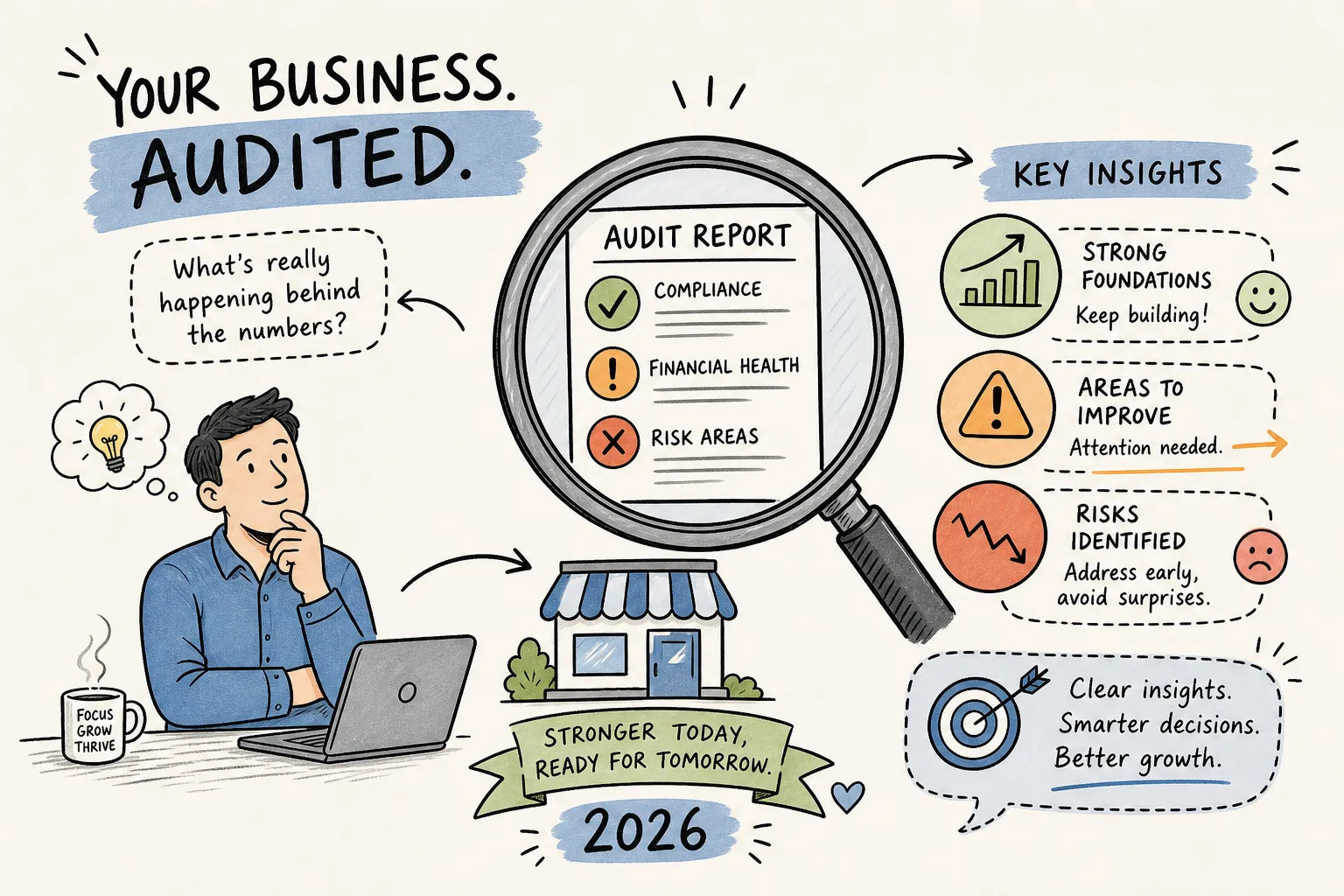
When a homeowner asks Google AI or ChatGPT who to call for HVAC repair or a roofing job, the platform doesn’t pick whoever spends the most on ads. It names the business that looks most credible, trustworthy, and relevant based on dozens of digital signals it can actually read and verify. For many local queries, authority signals can be as important, or more important, than ad spend when it comes to being named by AI systems. Spend without authority and you’re invisible in that conversation.
A digital authority audit is the diagnostic process that exposes those signals and the gaps in them. It tells you not just whether you show up, but why you don’t get recommended. TW3 Marketing began developing this approach well before AI-driven discovery became a mainstream concern for local businesses. The result was a structured diagnostic system built around exactly what AI platforms look for when they decide who to surface. That system is called the Authority Audit™, and what it reveals surprises most business owners.
Why “Getting Found Online” Isn’t the Same as Being Trusted
There’s a meaningful difference between visibility and authority. Visibility means you show up somewhere in search results. Authority means you get named and recommended. A business can rank on page one of Google and still lose customers to a competitor with stronger trust signals. That gap has always existed. AI-driven discovery made it critical.
What Changed When AI Entered the Search Equation
Traditional keyword search returns a list of links. The user makes the decision. AI-driven platforms like ChatGPT, Google AI Overviews, and voice assistants work differently. They don’t show a results page. They name a business, one business. The criteria for that selection are authority-based, not just SEO-based. According to BrightLocal’s 2026 Local Consumer Review Survey, 45% of consumers now use an AI assistant to find local services. A business with weak authority signals simply won’t be named in that process, regardless of how long it’s been operating or how good its actual service is.
What a Local Business Authority Audit Actually Examines
Most marketing audits check traffic, rankings, and ad spend. Those are useful numbers, but they don’t tell you why a customer chooses a competitor after visiting your site, or why ChatGPT recommends someone else when asked for a plumber in your city. A local authority audit for businesses examines something different: the signals that build or erode trust.
It’s a Credibility Diagnostic, Not a Website Review
A real authority audit reviews a business across its entire digital footprint. That includes the Google Business Profile, website structure, content quality, review patterns, third-party mentions, schema markup, and how consistently the business is categorized and described across directories and platforms. Each of these areas generates signals. AI systems read and weigh those signals when deciding who to recommend.
This kind of local business authority audit also touches on areas that overlap with what local government and licensing databases track, things like consistent business name and address records that match your business license filings. What a credibility diagnostic ultimately surfaces is the answer to a simple question: does your digital presence tell a coherent, verifiable story about who you are and who you serve?
The Six Signals That Determine Your Authority Score
Not all authority problems are the same. Some businesses have strong positioning but almost no external validation. Others have decent reviews but content so thin that AI systems can’t confidently categorize what they actually do. The six core authority signals break this down into something you can measure and act on.
Positioning, Proof, and Expertise: The Trust Foundation
Positioning means your digital presence clearly communicates who you serve, what you do, and why you’re the right choice. If an AI system can’t determine that quickly from your website, your GBP, and your content, it won’t recommend you. Proof means reviews, case studies, and testimonials back up your positioning with specifics, not just star ratings. Expertise means your content demonstrates genuine depth. Content that reads like it was written to fill space doesn’t build authority, it erodes it.
Visibility, Engagement, and Experience: The Discovery Layer
Visibility means authoritative third-party sources mention and link to you. Local news, industry directories, chamber listings, and roundup pages all serve as independent corroboration that AI systems use to verify your credibility. Engagement means real customers are interacting with your content and reviews in ways that signal an active, trusted business. Experience means the journey from finding you to contacting you feels credible and frictionless. A poorly structured site or a confusing path to contact undercuts every other signal you’ve built.
These six factors form the foundation of TW3 Marketing’s Authority Framework™, a model built around what AI platforms and human customers actually use to evaluate a service business before making a recommendation.
Why 2026 Raised the Stakes for Local Service Businesses
The shift isn’t coming. It’s here. A significant portion of local service inquiries now start with an AI prompt, not a Google search. When someone asks “who’s the best plumber near me” through a voice assistant or ChatGPT, the AI doesn’t show a results page. It names a business. If your authority signals are weak or inconsistent, you’re simply not part of that conversation, and you’ll never know what you lost.
What Happens When Competitors Close the Gap First
Authority-building takes time. Businesses that run a credibility audit now and act on the findings will accumulate the signals AI platforms reward before most competitors realize the rules have changed. Waiting to “see how AI search evolves” is the same as waiting to build a reputation until you desperately need customers.
The businesses showing up in AI recommendations right now aren’t necessarily the best in their market. They’re the ones that built the right signals first. Based on how entity-based ranking systems accumulate and compound trust signals over time, that early lead becomes progressively harder for a competitor to close once it’s established.
How a Local Business Authority Audit Scores Your Business in Practice
A structured scoring system removes the guesswork that makes most audits useless. TW3 Marketing’s Authority Audit™ scores a business across all six core signals and produces a weighted Authority Score™ by category, a proprietary framework built to identify which specific gaps are costing the most in terms of AI discoverability and customer trust. The output isn’t a vague list of recommendations. It’s a prioritized gap analysis with a clear roadmap for fixing each one.
What the Audit Report Tells You That Most Audits Won’t
The findings from a rigorous authority audit tend to surprise business owners, not because the problems are exotic, but because they’re invisible until someone measures them. Weak positioning language that confuses AI categorization. Inconsistent NAP data across directories that fragments trust and creates entity ambiguity. Review patterns with no owner responses, which AI systems read as low engagement. Content that’s off-topic or too thin for search engines to confidently match to user intent.
These aren’t cosmetic problems. According to BrightLocal’s research on local listing accuracy, inconsistent name, address, and phone data alone can meaningfully suppress AI discoverability, estimates in the literature range from 20 to 30 percent or more, though results vary depending on market and category. Entity consistency, GBP completeness, review signals, third-party corroboration, and structured data are among the primary signals AI platforms use to include or exclude a business from recommendations, as identified in multiple local SEO analyses including BrightLocal’s 2026 findings. They’re fixable once you know they’re there.
Turning Audit Findings Into a Plan That Actually Moves the Needle
Audit findings are only useful if you treat them as a roadmap, not a report card. The first instinct after seeing a gap list is to fix everything at once. That’s the wrong approach. Not every gap is equal, and not every fix requires the same time investment.
Prioritizing Fixes by Impact, Not Complexity
Some authority problems can be resolved quickly and have an outsized impact on how AI reads your business. Cleaning up inconsistent NAP data across directories, the same records that feed city and county business license databases, adding structured schema markup, and strengthening thin service page content are the kinds of fixes that shift how AI systems categorize and verify your business. Others, like building a healthy review profile, require consistent attention over time rather than a single burst of activity. The roadmap should reflect that difference. Lead with the fixes that move the signal fastest, then build the habits that sustain authority long-term.
The Difference Between Patching Signals and Building Authority
Authority isn’t built by fixing a website. It’s built by aligning everything a business puts online around consistent, credible signals: content, positioning, reviews, directory listings, and site structure. That alignment is what AI platforms are looking for when they decide who to recommend. It’s also what prospective customers respond to before they ever pick up the phone. An audit tells you where the misalignment is. Acting on it builds the kind of credibility that earns recommendations from both humans and AI systems.
Where to Start If You’re Serious About This
A local business authority audit isn’t a technical exercise. It’s a reality check on how trustworthy your business actually appears to the platforms that now make the first introduction to your next customer. For local service businesses in 2026, authority signals have become a determining factor in AI-driven discovery, and no ad budget compensates for their absence. The businesses showing up in AI recommendations built the right signals. An audit tells you where you stand and what to fix.
If you want to know where your business stands before committing to a full audit, TW3 Marketing offers an Authority Score™ Check: a 48-hour assessment that shows how your business currently appears in Google and ChatGPT. It’s a practical first step, not a sales pitch. You’ll see the gaps clearly, and you’ll know exactly what you’re working with.
Many local service businesses don’t have a marketing problem. They have an authority problem. A local business authority audit identifies which specific gaps are holding you back, so you can close them before a competitor does.
Frequently Asked Questions: Local Business Authority Audit
What is a local business authority audit?
An authority audit reviews the signals surrounding your business, positioning, proof, expertise, visibility, engagement, and experience, to show whether a customer or an AI system can understand you, trust you, and confidently recommend you.
What does an authority audit usually reveal?
Most businesses have far more real-world authority than their online presence shows. The audit tends to find buried credentials, undocumented results, reviews that are not used as proof, and inconsistent business information that quietly costs trust.
How is an authority audit different from an SEO audit?
An SEO audit focuses on rankings and technical health. An authority audit looks at whether enough credible evidence exists for people and AI to choose you. It answers a harder question: if a stranger knew nothing about you, would there be enough proof here to trust you?
Do I need a new website after an authority audit?
Not always. Many businesses need stronger proof, clearer service information, better reviews, and consistent details rather than a full rebuild. The point of the audit is to find the real gap before spending money fixing the wrong thing.
