
AI answer optimization is the practice of structuring content and authority signals so systems such as ChatGPT, Gemini, and Perplexity can understand, select, and cite a business accurately in generated answers.
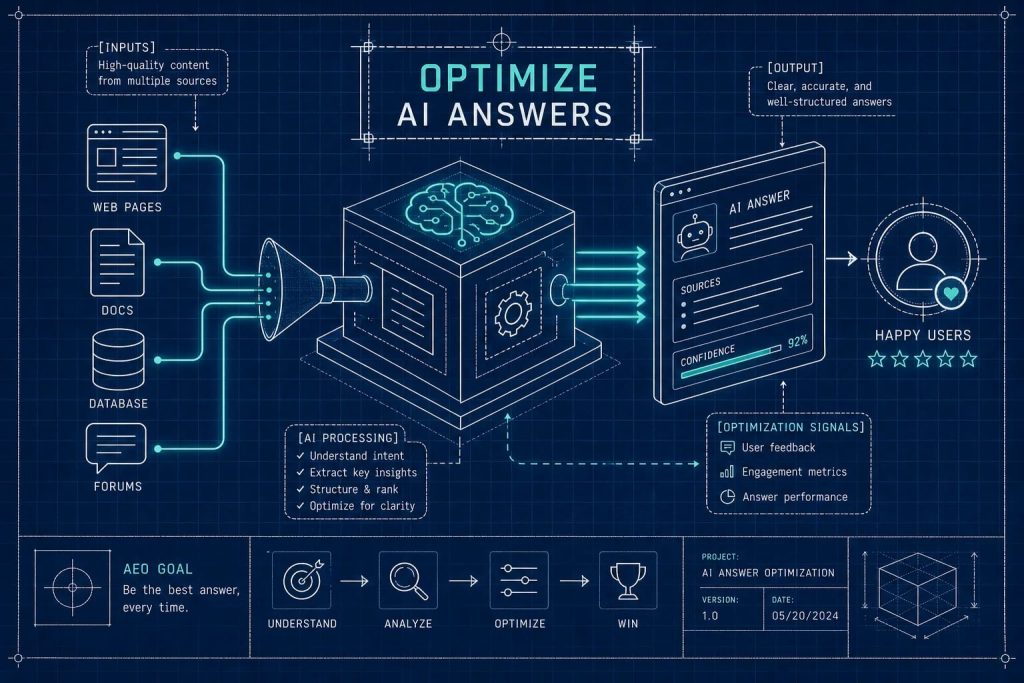
This is not simply SEO with a new acronym. Traditional search optimization helps a page compete for visibility in search results. Answer engine optimization, or AEO, also considers whether machines can interpret the page, connect it to a credible entity, and extract a useful response without losing context.
This guide explains what AEO is, which signals can improve citation readiness, how content structure supports retrieval, and how to diagnose gaps before producing more content.
What is AI answer optimization?
AI answer optimization makes content easier for answer engines to retrieve, interpret, and attribute. It combines clear writing, sound technical structure, consistent entity information, credible sourcing, and demonstrable expertise. The goal is not to manipulate an AI system. It is to remove ambiguity so a trustworthy answer can be understood and cited accurately.
Search rankings and AI citations can overlap, but they are not the same outcome. A page may rank well and still be difficult to quote because its answer is buried, its authorship is unclear, or its claims lack support. A well-structured page still needs genuine authority and relevance to deserve selection.
How do AI systems decide which content to cite?
Authority and authorship signals
Visible authorship helps readers and machines understand who is responsible for a claim. Use a real byline, a useful author biography, and consistent Person and Organization information. Connect the author, publisher, article, and website through coherent schema rather than creating duplicate or conflicting entities.
Independent corroboration also matters. Original research, documented experience, and proprietary frameworks give other sources something specific to reference. Generic summaries can be useful, but they provide less differentiation when many sites repeat the same ideas.
Clarity, relevance, and recency
A direct answer, descriptive headings, and logical relationships between ideas make a page easier to interpret. Dates can help users evaluate time-sensitive material, but changing a date without improving the substance does not make content current. Review important claims, links, examples, and recommendations when a page is materially updated.
What content practices improve citation readiness?
Use an answer-first structure
Open each major section with a concise answer that makes sense on its own, then add explanation, evidence, examples, and limitations. There is no universal word count that guarantees selection. Completeness and clarity matter more than forcing every answer into the same length.
Use headings that reflect real buyer questions
Question-shaped headings can align the page with the way buyers ask for help. Use them when they improve navigation and intent matching, not as a formula. Lists and comparison tables are useful when the information genuinely calls for them. The best format is the one that communicates the answer accurately.
Support important claims
Link important factual or quantified claims to credible sources, preferably primary sources when available. Separate verified facts from professional judgment and label examples appropriately. Do not add statistics simply to make a page appear authoritative.
What schema supports AI answer optimization?
Schema should describe the content users can see. A blog post normally needs one coherent BlogPosting or Article node, not duplicate versions of both. That node can connect to the author, publisher, WebPage, breadcrumb, and website entities. FAQPage schema is appropriate only when the same questions and answers are visible on the page and the markup complies with current search-engine guidance.
Clean semantic HTML remains important. Use one H1, logical H2 and H3 levels, real lists, accessible tables, descriptive link text, and helpful image alt text. Schema cannot repair unclear or inaccessible page content.
How do you find your AEO gaps?
Start with a diagnostic baseline. Identify the buyer questions the business should answer, whether the brand appears in relevant AI responses, which pages are cited, and whether those citations are accurate. Then examine positioning, proof, expertise, visibility, engagement, experience, technical structure, and entity consistency.
The TW3 Marketing Authority Framework connects those signals into a practical system. The TW3 Marketing Authority Score provides a structured way to assess strengths and gaps, while the TW3 Marketing Authority Audit diagnoses what deserves attention before tactics are prescribed.
For ongoing measurement, track meaningful prompts, brand mentions, linked citations, share of relevant answers, source-page coverage, and whether the answers accurately represent the business. Tool results are directional; verify important findings manually.
Why does AEO compound over time?
Clear content, consistent entity signals, earned third-party proof, and credible citations reinforce one another. A single page update can improve clarity, but lasting AI visibility comes from maintaining an evidence-led body of work across the website and the wider web.
Build useful answer-first content, strengthen the signals that verify who you are, and diagnose the gaps before scaling production. AI answer optimization works best as an ongoing discipline rather than a one-time content fix.
