
AI chatbots like ChatGPT, Gemini, and Perplexity decide who to mention based on three factors: training data, authority signals, and how well your content is structured to answer specific questions. If you’ve ever noticed a competitor showing up in an AI response while your firm doesn’t, the gap frequently comes down to one of those three areas. Understanding each factor gives you a clear path to closing it.
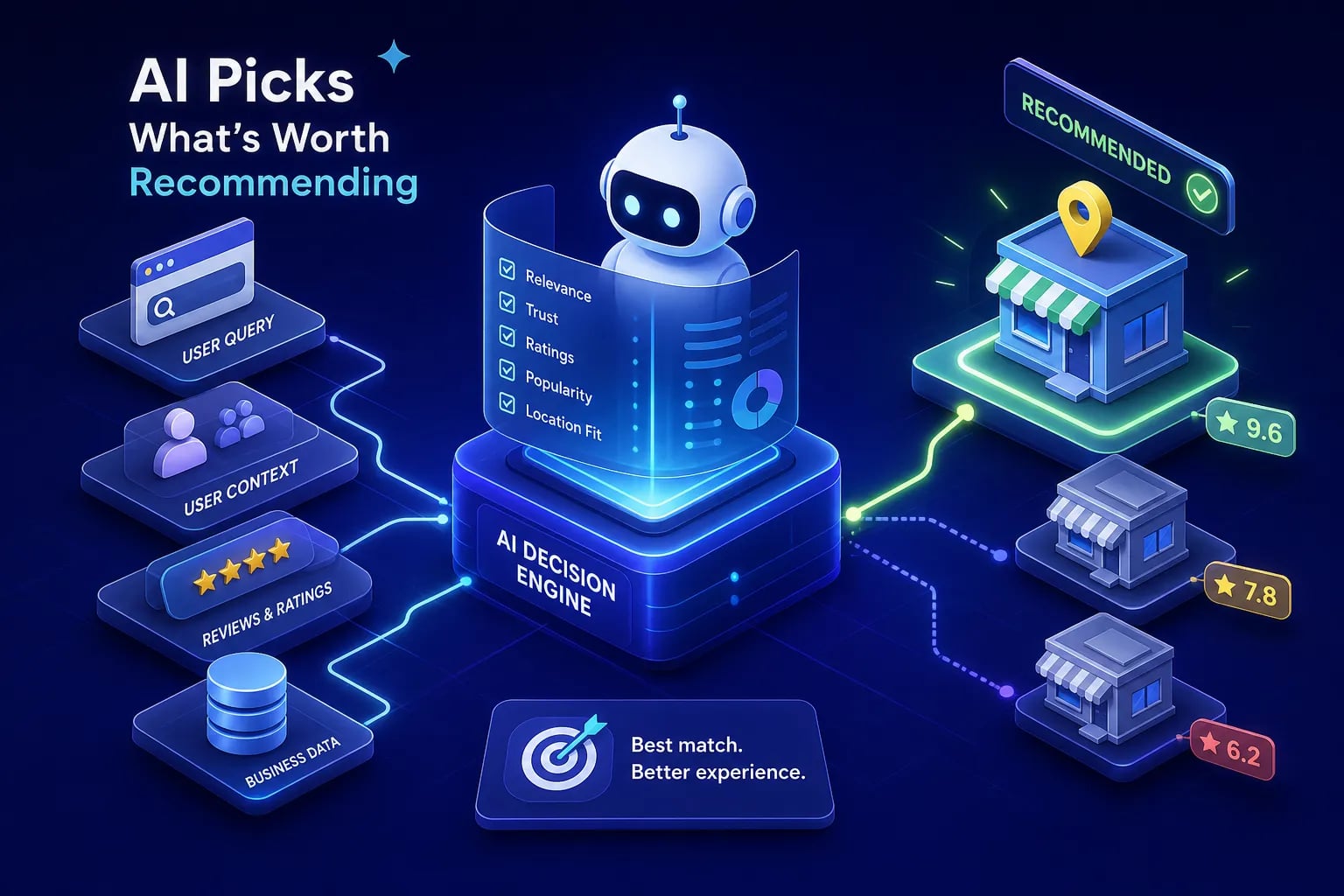
This isn’t about gaming an algorithm. It’s about building the kind of documented, verifiable expertise that AI systems are designed to surface. Firms that approach this work deliberately are positioning themselves to show up more often when prospective clients ask a conversational AI for a recommendation.
Key takeaways
- Training data drives recognition: AI chatbots learned about businesses from publicly published content. If your firm wasn’t publishing specific, findable material, it may simply not register.
- Third-party mentions are among the strongest signals: Reviews, citations, directory listings, and editorial coverage signal credibility far more effectively than self-description on your own website.
- Specificity outperforms breadth: Narrow, detailed content on a defined topic consistently outperforms generic service pages in AI outputs.
- Cross-referencing is how AI builds confidence: A business recognized by multiple credible sources is treated as more trustworthy than one with a polished website and no external presence.
- Structure makes content citable: FAQs, clear answers to client questions, and well-organized service pages give AI systems something concrete to pull from and reference.
How training data shapes what AI chatbots know about your firm
Published content and depth of coverage
AI chatbots were trained on vast amounts of publicly available text: websites, articles, professional directories, industry publications, and structured content across the web. These AI chatbot platforms learned about businesses, industries, and professionals from whatever was published, indexed, and accessible before their training cutoff. If your firm wasn’t publishing clear, specific, and findable content, it simply didn’t make the cut, regardless of how strong your actual work is.
Having a website isn’t enough. Training data rewards depth and specificity. A consultant who has published detailed articles on fractional CFO engagements, or an insurance agency that has answered niche coverage questions in writing, creates far more signal than a firm with a polished homepage and nothing else. The chatbot learned what you know from what you wrote.
Live browsing and recency
Beyond the training snapshot, AI systems with live browsing capabilities can retrieve current content at answer time. Your most recently published material matters too. A GPT chatbot or similar large-model tool can pull from fresh sources when generating a response, which means a consistent publishing cadence keeps your firm visible on both fronts.
Structured data and discoverability
How your content is marked up matters as much as what it says. Implementing schema markup, such as schema.org/LocalBusiness or FAQ schema, makes it easier for AI systems to parse your firm’s specialization, location, and services accurately. These technical signals work alongside your written content to build a complete, machine-readable picture of who you are and what you do.
What authority signals do AI chatbots actually pick up on?
AI chatbots weigh third-party mentions heavily. Reviews on authoritative platforms, citations in trade or industry publications, professional directory listings, and consistent business information across multiple sources all serve as credibility signals. A law firm mentioned in a legal industry publication, a real estate team cited in a local business journal, or an insurance agency with consistent reviews across Google and industry-specific directories, these patterns register as trustworthy in training data and in real-time retrieval systems.
AI doesn’t evaluate your firm in isolation. It cross-references signals. A business with a detailed website but zero external mentions raises less confidence than one with a clear online presence that other trusted sources also acknowledge. Professional credentials, licenses, association memberships, and named experts with verifiable qualifications add another layer of legitimacy that AI systems can identify and cite. Documented expertise that generates citations, quotes, and references carries disproportionate weight in what these conversational agents surface.
Why content structure determines whether you get cited or skipped
When someone asks Perplexity or ChatGPT “who’s the best consultant for X in my industry,” those chatbot tools are looking for content that directly answers professional questions. Generic service pages don’t satisfy that query. Structured content, including FAQs, detailed explanations of process, responses to common client questions, and case-specific guidance, gives AI systems something concrete to cite. If your content is vague, the chatbot has nothing to pull from, and someone else fills the space.
Narrow, well-developed content on a specific topic tends to outperform broad, surface-level content in AI outputs. A financial advisor who has published a clear explanation of Roth conversion strategies for business owners is far more likely to be cited on that topic than a generalist firm with a blog post titled “Retirement Planning Tips.” The chatbot is pattern-matching expertise, and specificity is the clearest pattern it can read. Clear headings, direct answers, and well-defined service pages make that pattern easier to extract.
What professional firms can do to improve AI visibility
Most established professional firms have the credentials, the track record, and the client results. What they often lack is a documented, structured, publicly visible record of that expertise. AI chatbots can’t infer competence from a client list you keep private or referrals that live in conversations. The work has to exist in a form that training data and real-time search systems can access and trust.
Firms that show up consistently in AI responses tend to share a few habits: they publish expert content that answers real client questions, they maintain a credible presence across authoritative third-party platforms, they earn external mentions and citations, and they structure their web presence so their specialization is unmistakably clear. These things don’t happen by accident. They require deliberate, sustained effort to build a presence that both buyers and AI systems can verify.
This is precisely the kind of authority-building work that the TW3 Marketing Authority Framework is built around, connecting positioning, proof, visible expertise, and reputation into a presence that gets recognized. The TW3 Marketing Authority Audit™ gives firms a 100-point assessment of where the gaps are and a prioritized roadmap of where to focus before any implementation begins, so the effort is directed where it is most likely to help.
The evidence is what the AI is looking for
AI chatbots reflect what the evidence supports, though like any technology they can also miss or misrepresent things, which is exactly why a strong, consistent, well-sourced presence matters so much. Training data, authority signals, and content structure are the three levers that determine whether your firm gets mentioned when a prospective client asks an AI for a recommendation. These aren’t luck-dependent factors. They respond to a documented record of expertise that matches what buyers are actually asking about.
If your firm has earned the right to be recommended, the next step is making sure the evidence exists where AI chatbots can find it. That gap between being genuinely good at what you do and being the name that actually comes up is one that strategy, not chance, can close. Get in touch with our team to find out where your firm stands and what it would take to get there.
Frequently Asked Questions
Do third-party reviews and citations actually move the needle for AI recommendations?
Yes, third-party mentions like reviews, citations, and directory listings are among the strongest signals AI systems register. We point out that a business referenced by multiple trusted sources generates more confidence than one with only self-published content.
Is it better to publish very specific content or broad service pages?
Publishing narrow, well-developed content is better for getting cited than generic, broad pages. We explain that specificity creates clear patterns AI can match to user questions, so focused topics consistently outperform surface-level content.
Does adding schema markup make a measurable difference in discoverability?
Yes, schema markup makes it easier for AI systems to parse your specialization, location, and services accurately. We indicate that implementing types like schema.org/LocalBusiness or FAQ schema helps build a machine-readable picture of who you are and what you do.
