
A consulting or advisory firm can build a steady pipeline without paid ads by running four connected parts: a narrow authority position, problem-led thought leadership, a managed referral system, and a CRM pipeline with disciplined follow-up. Each part feeds the next.
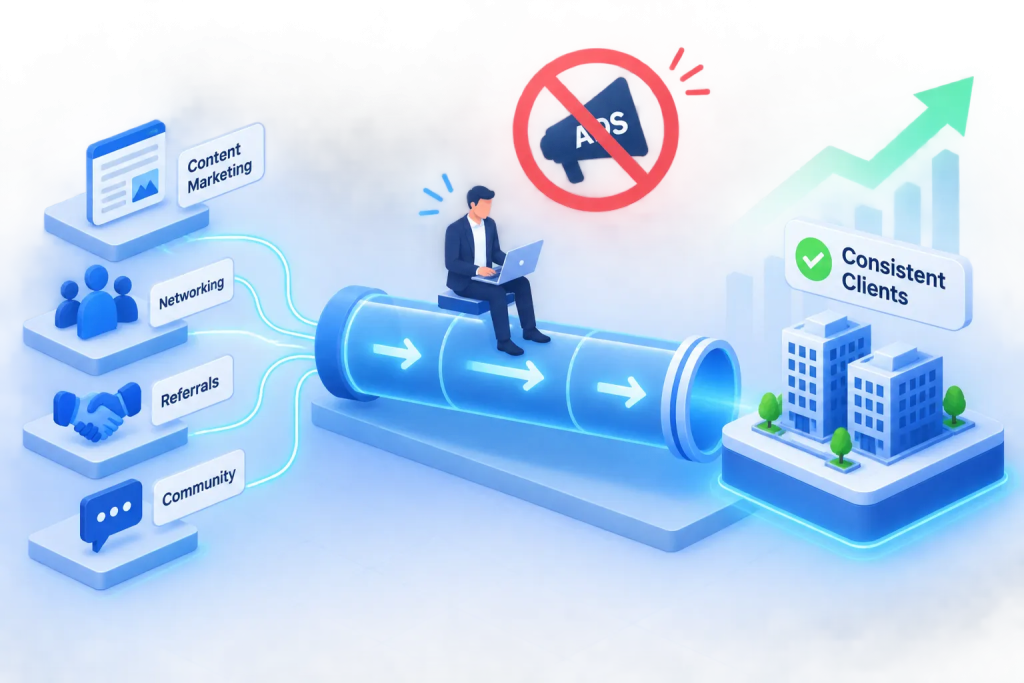
The weak spot is often the fourth. When pipeline management is loose, authority may not consistently turn into booked sales conversations.
At TW3 Marketing, founded by Bobby Christy, we connect authority strategy, CRM pipeline, and follow-up into one implemented system for established consulting and advisory firms. No hacks. No volume games. The goal is better-fit clients and fewer dead-end conversations.
Key takeaways
- Narrow beats broad: A sharp problem statement for a specific buyer makes everything else easier.
- Write about problems: Content earns trust when it explains the buyer’s problem, not your firm.
- Manage referrals: Treat them as a channel with moments, asks, and tracking.
- Follow up with discipline: Every opportunity needs a next action, an owner, and a date.
How can consulting firms generate leads without paid ads? Start by choosing who you serve
Start with evidence, not instinct. Pull three to four years of closed-won, closed-lost, and repeat-client data, then compare win rate, margin, project success, and referral potential. Interview your best clients and recent wins about why the problem became urgent and who signed off.
Then replace “strategy advisory” with a problem statement a buyer recognizes, such as “helping regional healthcare groups cut claims-processing costs during a platform transition.” That sentence tells a buyer whether you are for them.
Next, learn the triggers that create urgency. Common ones include:
- A new executive or practice leader
- A merger or integration mandate
- A funding round
- A restructuring
- A regulatory deadline
- A failed transformation
A high-fit account with no urgency belongs in nurture. A good-fit account with a live trigger deserves attention now.
This is why positioning comes first. Buyers judge credibility before the first call, and the TW3 Marketing Authority Framework looks at positioning, proof, expertise, visibility, engagement, and experience for that reason. Get the position clear before you start content or outreach.
How does thought leadership turn into qualified sales conversations?
It turns into conversations when you write about the problem and give every piece a specific next step. Use a simple order: observation, implication, diagnosis, framework, next step. Take a defensible position on why common approaches fail, and back it with diagnostic checklists, anonymized case examples, and decision frameworks.
Content can carry real weight for organic lead generation for consultants. One 35-engagement benchmark from 100signals found organic search generated 22% to 61% of qualified inbound inquiries. That figure is vendor-reported and drawn from selected SEO engagements, so it may not hold for every consulting firm. Treat it as directional.
Replace the generic “contact us” with a problem-based entry offer: a fixed-scope audit, readiness assessment, or strategy sprint with defined scope, timeline, and deliverables. A 30-day revenue operations bottleneck audit is one example. The path runs from insight to self-diagnosis to an expert conversation, then a paid diagnostic, then a larger engagement.
Make your expertise easy to verify, too. Some signals can help both buyers and AI assistants: clear specialization, published answers to high-value questions, visible proof, and consistent credentials. AI recommendations also depend on the prompt, available sources, and the model itself, so we can’t promise rankings or AI recommendations. We can make your expertise understandable and verifiable.
How do you build a consulting referral strategy you can count on?
You manage referrals like a channel. A 2026 Hinge study, as reported by IvyForms, found referrals accounted for 39.5% of new-business leads in professional services, and about 63% when combined with sales and direct outreach. Those figures describe the sector, not your firm, but they show how much new business can come from human relationships.
Write a one-page “ideal referral” description so partners can repeat it accurately. Then segment your sources: current clients, former clients, complementary firms such as accountants and attorneys, and industry communities. Each group needs a different message.
Ask at designed moments: after a measurable win, at project closeout, at quarterly reviews, and when a former client lands a new role. Make the ask specific. “Who are two operations leaders facing this issue?” works better than “please refer us.” Give people a forwardable email, a short form, and a booking link, and track every introduction in your CRM from first call to collected revenue.
Your partners control referral timing, not you. Balance it with problem-led content and targeted outreach to accounts that resemble your best past clients. Also watch for one partner dominating your pipeline.
What keeps prospects from falling through the cracks?
Clear stages with clear exit criteria. Here is a workable sequence:
- New lead
- Initial contact
- Qualified
- Discovery
- Proposal
- Decision
- Won, lost, or long-term nurture
Define “qualified” in writing: confirmed problem, fit, urgency, decision process, and a next meeting. Keep “lost” separate from “nurture.” Lost means closed or unsuitable. Nurture means a credible future opportunity remains.
Then make follow-up add value. Send a recap within one business day of the first conversation. After discovery, share a relevant case example or diagnostic observation. After a proposal, schedule the review and agree on a decision date. When a prospect goes quiet, run a short value-adding sequence that ends with a clear close-the-loop option.
No opportunity sits without a next action, an owner, and a date. That one rule helps surface missed follow-ups.
This is where TW3 Marketing connects authority to CRM. We treat it as an implemented business system, not a DIY software tutorial.
We start with the paid TW3 Marketing Authority Audit™, a 100-point assessment with a prioritized roadmap, before recommending Momentum or Domination, our two implementation tiers. Our Free Authority Level assessment is a lighter preliminary step.
Authority only pays when the system catches it
A consistent consulting pipeline without paid ads can come from a narrow position, useful expertise, managed referrals, and a pipeline that follows up. We recommend treating these four as one operating model, though channel effectiveness and pipeline needs vary from firm to firm.
You don’t need more channels. You need fewer that are connected and measured. Keep the rhythm simple: one point-of-view piece, one follow-up block, and one pipeline review each week.
If your firm has proven expertise and the capacity to invest, start with the TW3 Marketing Authority Audit™. It shows where authority is leaking before it reaches a sales conversation. We make no promises about revenue, rankings, or AI recommendations. We show you what’s working, what isn’t, and what to fix first.
Frequently Asked Questions
When should you nurture a prospect instead of pursuing them now?
You should nurture a high-fit prospect when there is no immediate urgency. A good-fit account with a live trigger, such as a restructuring or regulatory deadline, deserves attention now.
What can you offer instead of a generic contact form?
You can offer a fixed-scope audit, readiness assessment, or strategy sprint tied to the buyer’s problem. Define the scope, timeline, and deliverables so the next step is clear.
When is a good time to ask a client for a referral?
You can ask for a referral after a measurable win, at project closeout, or during a quarterly review. Make the request specific and give your contact a forwardable email, a short form, and a booking link.
What is the difference between a lost opportunity and one in nurture?
A lost opportunity is closed or unsuitable, while an opportunity in nurture still has credible future potential. Keep the two categories separate in your CRM.
What does the TW3 Marketing Authority Audit™ include?
Our paid TW3 Marketing Authority Audit™ is a 100-point assessment with a prioritized roadmap. Our Free Authority Level assessment is a lighter preliminary step.
