
Premium client marketing is a positioning and credibility challenge, not a volume problem. When positioning signals clear specialization, proof reduces perceived risk, and visibility reaches the right buyers, better-fit clients begin to self-select. A common pattern is that firms prioritize broad outreach over strengthening positioning and verifiable proof, and that gap is what keeps high-value clients looking elsewhere.
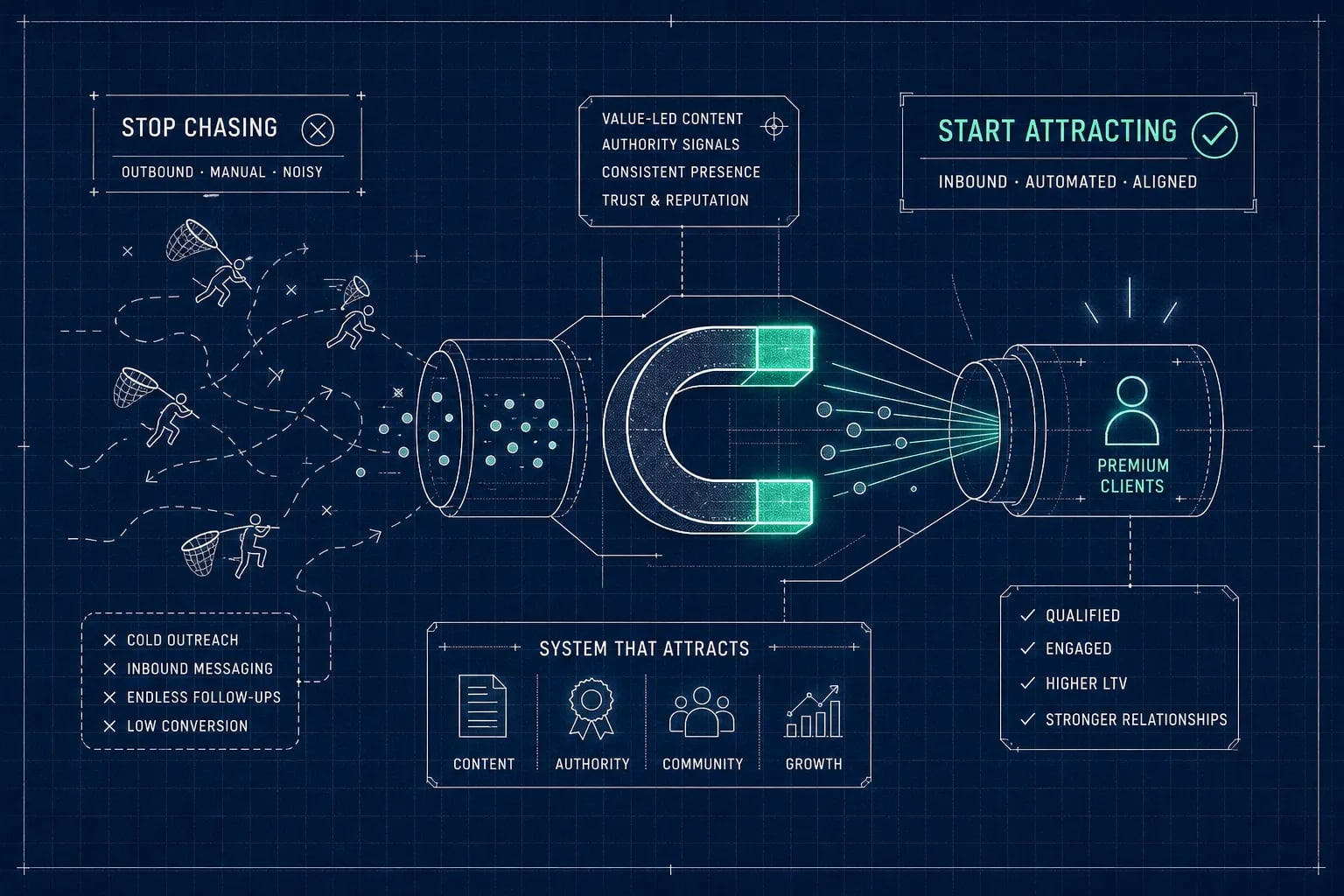
The pattern is familiar. A firm markets broadly, hoping to appeal to everyone, and ends up converting price-sensitive buyers who drain capacity and compress fees. High-ticket clients quietly move on to a firm that looked like the obvious specialist. The fix rarely involves more outreach or a bigger ad budget. It almost always starts with an honest look at how the firm presents itself before any tactics enter the picture.
Key takeaways
- Positioning drives self-selection: Specific client, specific problem, and a distinctive point of view are what cause premium buyers to reach out rather than scroll past.
- Proof must be verifiable: Quantified case studies and named credentials are substantially more persuasive than generic testimonials with sophisticated buyers.
- Buyers shortlist before they call: By the time a premium buyer contacts a firm, the decision is nearly made. Visibility and credibility do most of the selling.
- Trust-first channels dominate: Referrals, strategic partnerships, and LinkedIn authority outperform cold paid traffic for premium B2B engagements.
- Diagnosis before tactics: Applying channel tactics before the positioning and credibility foundation is solid produces mediocre results at best.
Why chasing every client makes premium buyers walk away
When a firm positions itself for everyone, it signals expertise for no one. Broad messaging compresses fees and attracts price-sensitive buyers, while sophisticated clients interpret generalist marketing as a red flag. Premium buyers pay for specific business results, not activities, and they look for a firm that clearly understands their world before they ever make contact.
The shortlist is formed before the first call. Premium buyers evaluate a firm’s positioning, online presence, and proof well in advance of reaching out. If the firm’s website reads like it serves any business with a budget, it has already been passed over. Credibility and visibility do most of the selling: the firm either made the shortlist or it didn’t, and that decision happened without a sales conversation.
Premium client marketing: why positioning determines who self-selects
A strong premium position combines a specific client type, a specific high-value problem, and a distinctive point of view on how to solve it. The 4P framework makes this concrete: identify the People you serve, the Problem you solve, the Price signal you project, and your Point of view that separates you from the field. Narrowing feels counterintuitive, but it consistently elevates the quality of inbound inquiries.
Messaging needs to reflect outcomes, not activities. Premium buyers buy transformation, not time or deliverables. A weak message describes what the firm does: “We provide strategic consulting and monthly advisory calls.” A stronger message names the transformation: “We help founder-led firms turn inconsistent growth into a predictable, executive-led sales system.” The structure that works is straightforward: name the current costly situation, describe the desired future state, explain the mechanism that gets there, and point to evidence it works.
Credibility signals that high-value buyers actually scrutinize
Positioning attracts attention. Proof earns serious consideration. Premium B2B buyers look for comparable, quantified case studies showing specific client context, measurable results, and a named timeframe. “Reduced onboarding time by 40% in 90 days” is persuasive. “Delivered transformational results” is not. Named executive testimonials, visible credentials, and a clearly explained proprietary methodology round out the credibility picture.
The website is where the positioning claim either holds up or falls apart. When the content, client proof, and expert bios tell a consistent story that matches the firm’s stated specialization, trust compounds. When they contradict it, the gap reads as a risk. Many firms don’t know which credibility signals are missing until they audit the full picture. A structured diagnostic like the TW3 Marketing Authority Audit™ evaluates positioning, proof, expertise, and visibility together, surfacing prioritized gaps before a firm invests in tactics that don’t address the real problem. Fix the gaps first, then amplify.
Premium client marketing channels that actually reach high-value buyers
Premium client acquisition is a layered system, not a single tactic. Referrals and warm introductions convert at the highest rate because trust transfers from the referrer, eliminating much of the risk a buyer associates with an unfamiliar firm. A structured referral engine asks after a clear win, names the exact client profile sought, and gives referrers a short introduction template. Strategic partnerships with adjacent professionals, accountants, attorneys, and fractional executives, create consistent access to pre-qualified buyers who are already in a buying mindset.
For direct visibility, LinkedIn personal profiles consistently outperform company pages for authority building and relationship development. Combining useful posts with signal-based outreach tied to a buyer’s specific business trigger produces better results than broadcasting alone. Thought leadership content, case studies, benchmark insights, and expert analysis serve both search visibility and AI-driven recommendations, which shape a growing share of how premium buyers discover firms.
Niche events and specialist communities concentrate decision-makers; attend with a clear point of view, not just a badge. Paid advertising earns a place in the mix only after the offer, positioning, and conversion process are already proven. High-ticket marketing built on trust-first channels scales more predictably than campaigns launched before the foundation is solid.
Build the system, then let qualified buyers come to you
Effective premium client marketing works when positioning, proof, and visibility are aligned and mutually reinforcing. Tactics applied before that foundation is solid produce inconsistent, low-quality results regardless of the channel or the budget. Order is not optional: clarify who you serve and why you’re the right choice, build credible evidence that buyers can independently verify, then choose channels that carry that message to the right people.
If premium buyers aren’t self-selecting, the first step is diagnosing which of those three layers is the weakest link. Running more ads or publishing more content before answering that question adds cost without changing the outcome. The right starting point is always diagnosis, and the right question is: what does a serious buyer see when they evaluate us before picking up the phone? A structured authority assessment surfaces exactly those gaps, and that is the right place to start attracting the high-value clients your firm is built to serve.
Frequently Asked Questions
How can we tell if our messaging is too broad and turning premium buyers away?
You can tell your messaging is too broad if it consistently attracts price-sensitive buyers and premium buyers silently move on. When your website and content read like you serve any business with a budget, sophisticated buyers interpret that as a lack of specialization and pass you over before a call.
If our budget is limited, what should we fix first to attract higher-value clients?
You should diagnose which of positioning, proof, or visibility is the weakest link and fix that first. Addressing the foundational gap before investing in channels prevents wasted spend and produces more consistent, higher-quality inbound inquiries.
What makes proof verifiable to high-value buyers?
Verifiable proof is concrete, quantified case studies with client context, measurable results, and a named timeframe, plus named executive testimonials, visible credentials, and a clear proprietary methodology. Those elements let buyers independently confirm the claim and reduce perceived risk.
How should we structure referrals so they actually produce premium leads?
A structured referral engine asks for referrals after a clear win, specifies the exact client profile sought, and supplies referrers with a short introduction template. That approach transfers trust efficiently and directs referrers toward the right potential buyers.
